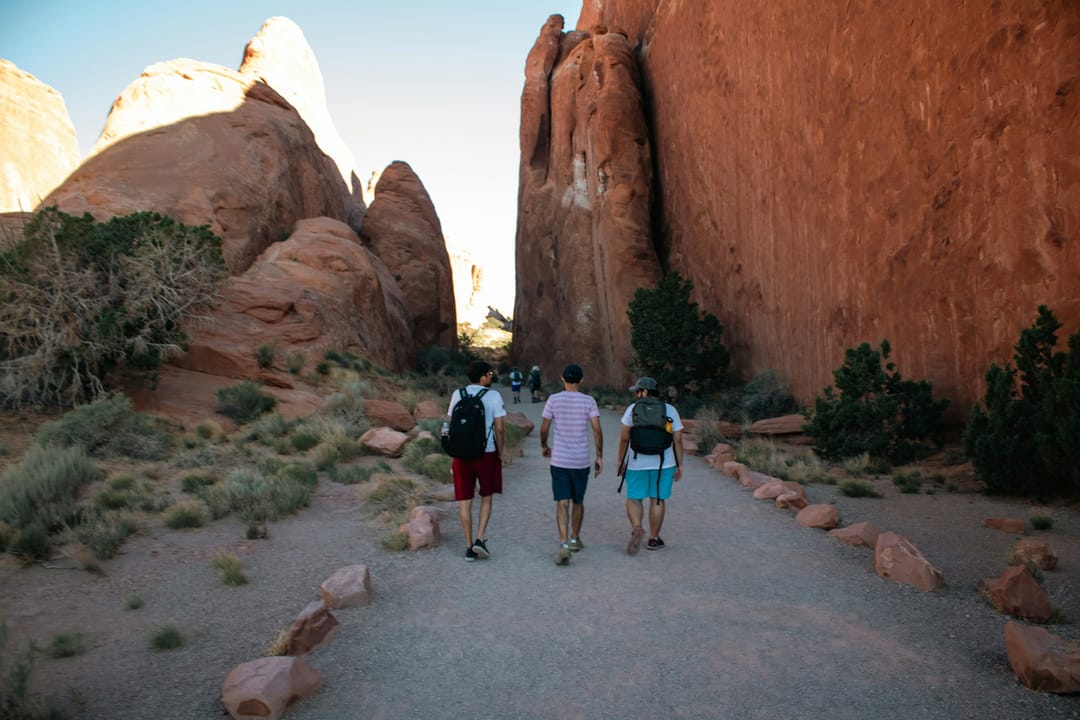
One-on-One vs Group: Which Is Better for Making Friends?
Groups are better for meeting people, and one-on-one time is how they become friends. Here's when to use each and how to switch.
Team Alyke

You've done the group thing: the trivia team, the birthday where you met a roomful of people and kept none of their names. Fun nights, and on Monday there's still nobody you'd text about dinner.
Or you've found that plans for two with a near stranger feel like a lot. Either way, you want to know which route gets you a real friend. The answer is both, in the right order.
What turns people into close friends?
Two things, mostly. First, the right person: someone whose interests overlap with yours and whose personality fits, the one who laughs at the same moment you do. Dartmouth researchers found that friends' brains respond to the same videos in exceptionally similar ways, so that sense of clicking is real.
Second, time together where you can talk without competing for airtime. A group is good at showing you who you click with. Closeness grows later, over plans where it's just the two of you.
Is it normal to want friends one at a time?
Completely. Twos are already the most common way people spend time together: in a Dutch study that checked in with 274 adults seven times a day for a week, 52.6% of social moments involved exactly one other person.
And plenty of people are looking. In a 2024 Gallup poll, 20% of American adults felt lonely for a lot of the previous day, so your next group night likely includes people who want a friend too.
So which is better, one-on-one or a group?
Groups are better for meeting people. One-on-one is better for becoming friends.
| One-on-one | Group | |
|---|---|---|
| Speed | Faster: all the talk is yours | Slower: time is split many ways |
| Depth | Easy to get personal | Mostly light, shared jokes |
| Pressure | Higher at first, nowhere to hide | Lower: you can listen and drift |
| Best for | Turning one person into a friend | Meeting people and seeing who fits |
Conversations max out at about four people, so a big group splits into side chats anyway. And in a classic 1997 study, pairs of strangers who spent 45 minutes on questions that slowly got more personal felt closer than pairs who made small talk.
When a group helps
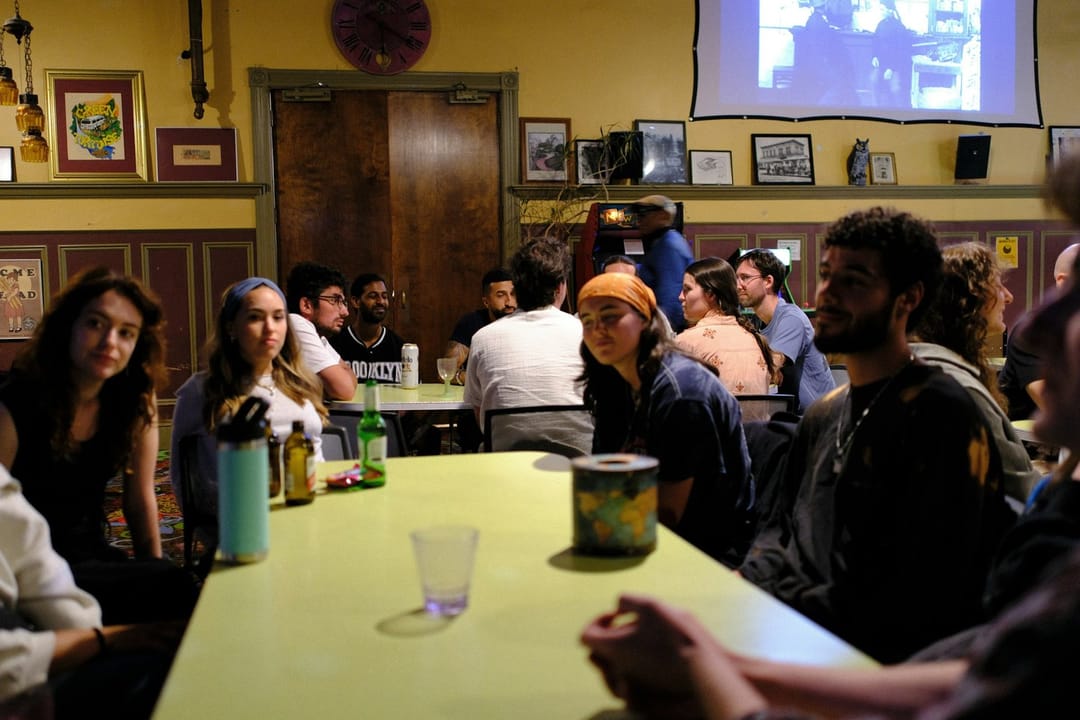
When you know nobody yet, or want to see how someone acts before giving them a whole evening. A weekly group also brings repeat run-ins without planning.
When to switch
Once you've talked with the same person a few times and found something you share beyond the group. The group alone is slow: Jeffrey Hall's research puts casual friendship at about 50 hours together, or just over two years of monthly two-hour group nights.
How to make the switch
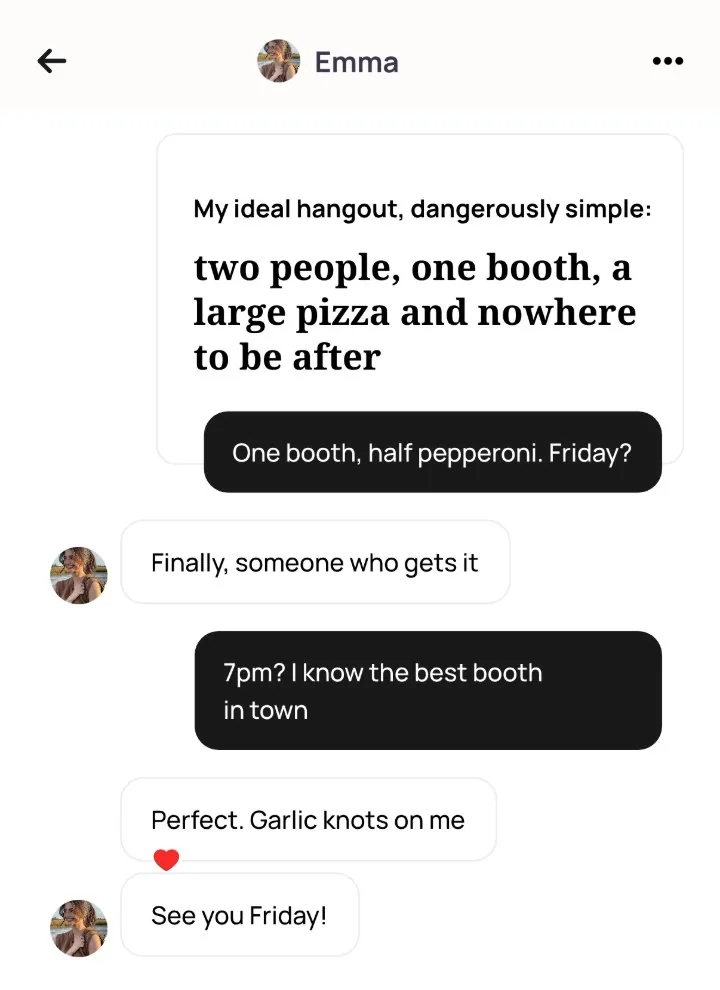
Piggyback on the group: ask the person you click with to grab food after. Then name a plan tied to what you share: “You mentioned that ramen place. Thursday?” Same move as when you turn an acquaintance into a friend.
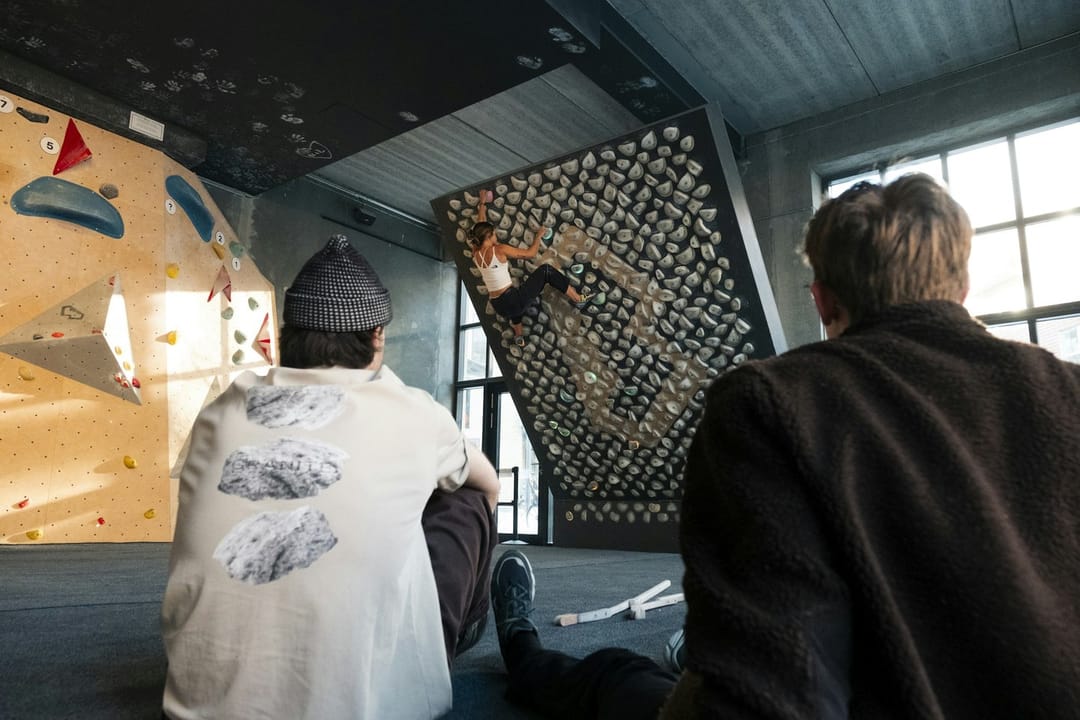
Both routes work, and the group one asks more of you: weeks of showing up, then the nerve to single someone out. If you'd rather go straight to one-on-one with a person whose interests overlap with yours, you can skip the group.
The easiest way to make a friend one-on-one
Alyke is built to help you find intentional friends, one person at a time. Most friend apps hand you generic recommendations. Alyke starts your feed with the people who share your vibe the most, based on your interests and personality instead of your looks. It's the easiest route because it starts where closeness grows, with two people and a shared interest, and skips the group stage.
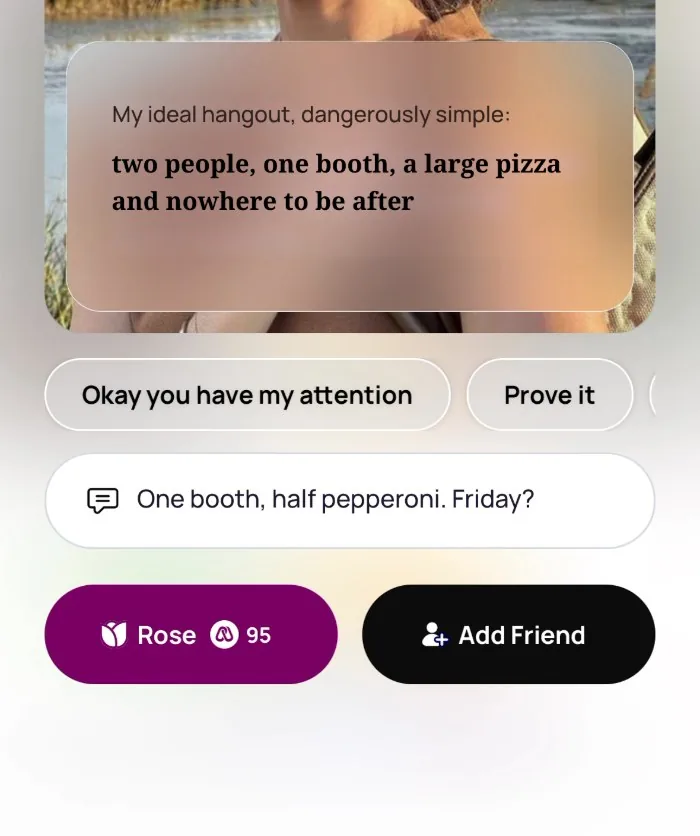
Alyke is one-on-one by design. You choose interests and give each a line in your own words. To add someone, reply to whichever line of theirs you'd answer anyway; once your vibe clicks for them, you're friends. Alyke Pro can filter by personality too, say, for someone who also prefers a table for two.
Questions people ask
What if one-on-one hangouts feel too intense?
Add an activity so you're side by side instead of face to face, like a walk, a museum or a cooking class, and keep the first one to about an hour. On Alyke, profiles show personality picks such as Chill Hangouts or Energetic Spaces, so you can see who would also prefer a low-key plan before you suggest one.
Should you join a big hobby group instead of looking for one friend?
You don't have to choose. A group is great for a regular hobby night, and one friend is someone you see outside it. Conversations max out at about four people anyway, so big groups split into smaller chats. On Alyke, you can find one person who added the same hobby as an interest on their profile, then go to the group together.
Is a dinner with strangers a good way to make friends?
It can be a fun night out, and sometimes one person from the table becomes a friend, but you don't get to choose who's there. If you'd rather choose, Alyke lets you browse profiles first and see each person's interests and personality. A friend request on Alyke is a comment you leave on their profile, so you get to know each other before anyone books a table.
Is there an app for making friends one-on-one instead of in groups?
Alyke is a friendship app for iPhone built for one-on-one friendship rather than group events. You browse people whose interests and personality are closest to yours, and you add one person at a time by commenting on something in their profile. When they like your vibe, a private chat opens between the two of you. Start with someone who shares an interest you could enjoy together in an hour, like Coffee or Bowling.
How do you find one close friend instead of a big group?
Alyke helps you look for one close friend directly, by showing you people who share your interests and personality. Profiles show three personality picks, like Chill Hangouts or Energetic Spaces, so you can find someone who enjoys the same kind of plans you do. Once you're friends, see each other regularly, because one-on-one time is where closeness grows. A weekly plan works better than an occasional big outing.
Why is Alyke built for one-on-one friendship?
Alyke is built for one-on-one friendship because people get close most easily in pairs, where there's one conversation and room for both of you to talk. In a classic study, strangers who answered gradually more personal questions together felt closer than those who made small talk. On Alyke, every friendship starts as a private chat between two people. Ask one real question in your first message.
Sources
- Dartmouth News. Your brain reveals who your friends are, 30 Jan 2018, on Parkinson, Kleinbaum and Wheatley, Nature Communications.
- Peperkoorn, L., Becker, D. V., Balliet, D., Columbus, S., Molho, C., and Van Lange, P. A. M. (2020). The prevalence of dyads in social life. PLoS ONE, 15(12). Record and full text: Toulouse Capitole Publications.
- Gallup. Daily loneliness afflicts one in five in U.S., Oct 2024.
- Dunbar, R. I. M., Duncan, N. D. C., and Nettle, D. (1995). Size and structure of freely forming conversational groups. Human Nature, 6(1), 67-78. Record: Northumbria University Research Portal.
- Aron, A., Melinat, E., Aron, E. N., Vallone, R. D., and Bator, R. J. (1997). The experimental generation of interpersonal closeness. Personality and Social Psychology Bulletin, 23(4), 363-377. SAGE Journals.
- Hall, J. A. (2018). How many hours does it take to make a friend? Journal of Social and Personal Relationships. Summary: University of Kansas News, 6 Mar 2018.