How to Make Friends After College When Everyone Scatters
Campus made friends easy without you noticing. Here's how to rebuild what it gave you, wherever you've landed.
Team Alyke

For four years, friends came to you. They lived down the hall, sat next to you in the class you both hated and showed up at the dining hall when you did. Then everyone graduated and scattered, and the group chat turned into memes and a reunion nobody books.
Now your week is work, the commute and the couch. You want a friend where you live, someone to grab dinner with on a Tuesday without planning it a month ahead. What made college easy can be rebuilt on purpose. Here's how.
Why did some college friends stick?
Think about who you still text from school. Plenty of people lived close by, and the ones who stayed were the ones you clicked with: the same terrible taste in movies, or a study session that turned into a three-hour talk.
Campus did the introducing, and what you had in common did the rest. A study that followed students as their friendships formed found that over time, shared interests and personality traits were what kept them going. You need the same two things now, minus the dorm.

Is it normal to lose friends after college?
It is, and the data shows it. A study of call records from 3 million phone users found the number of people we keep in touch with peaks around age 25, then shrinks until the late 40s. For most people, that slide starts a few years after graduation.
Plenty of people your age are rebuilding too. In a 2021 survey, 56 percent of adults under 30 said they'd added a new friend over the previous 12 months, so making one at your age is the normal thing.
How to rebuild what campus gave you
The sociologist Rebecca G. Adams has described three conditions for close friendship: proximity, repeated unplanned time together, and a setting where people let their guard down. College supplied all three. Now you set them up yourself, and add the piece that made friends stick: something in common.
| On campus | After college | |
|---|---|---|
| Proximity | Everyone lived a hallway or a quad away. | Pick one spot near home, like a gym or a coffee shop, and go at the same time each week. |
| Repeated, unplanned time | You ran into the same faces at meals and in class. | Commit to one weekly thing: a rec league, an evening class, a volunteer shift. Same day, same people. |
| A place to let your guard down | Late nights and group projects. | Choose things with an activity built in, like trivia or a run club that gets coffee after. The activity carries the talk. |
| Shared interests | Clubs and majors sorted you by what you loved. | Pick that weekly thing by what you're into, so everyone there shares something with you. |

Then make the plan. Campus never asked that of you. When someone keeps being fun to talk to, invite them to one specific thing. Here's how to turn an acquaintance into a friend, and how to start a conversation with someone new if hello is the hard part.
Rebuilding campus takes months of showing up and a lot of first hellos. If you'd rather begin with someone who already shares your kind of stuff, there's a shortcut that makes the introduction.
The easiest way to get that campus spark back
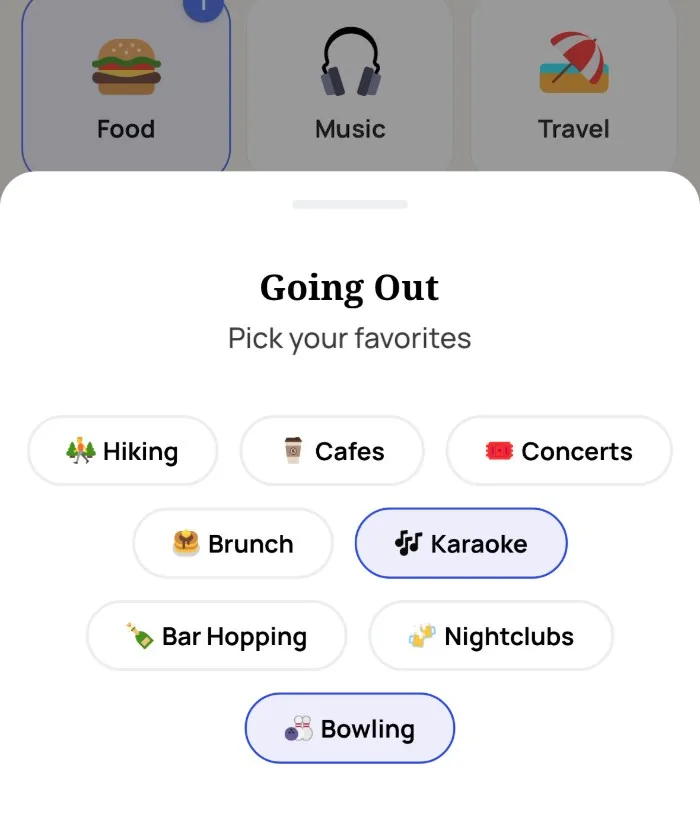
Alyke is built to help you find intentional friends, one person at a time. Most friend apps hand you generic recommendations. Alyke starts your feed with the people who share your vibe the most, based on your interests and personality instead of your looks. That brings back what campus handed you for free, finding out right away that someone loves the same thing you do.
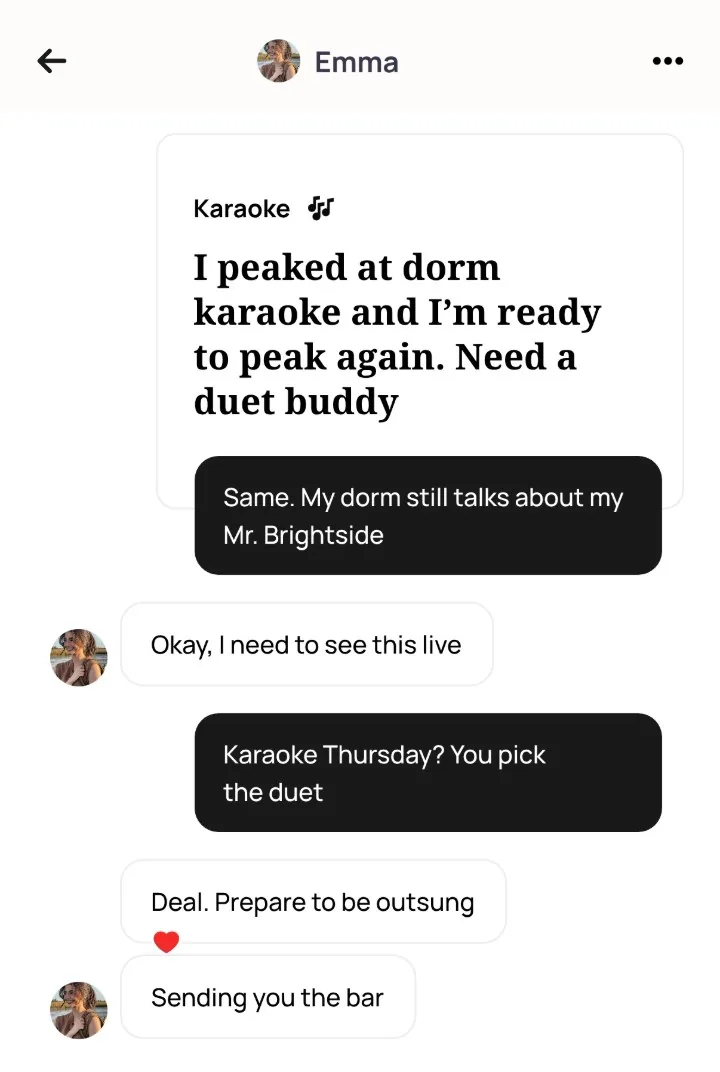
You choose what you're into and add a sentence on each. When someone's line makes you laugh, comment on it, and that comment is your friend request. The moment they like your vibe, the two of you are friends and the conversation starts from what you said.

Questions people ask
Is it normal to need help making friends after college?
Yes, it's very common. In 2021, 12% of Americans said they had no close friends, up from 3% in 1990. College puts friends in your path every day, and that stops at graduation. Alyke, a friendship app, helps you rebuild your circle after college: you add your interests to your profile, and Alyke shows you people who share them first.
Are people in their 20s using apps to make friends?
Yes. Plenty of people leave school without a built-in circle, and a friendship app is one of the simplest ways to meet someone new outside work. Alyke is only for making friends, so everyone you see there wants the same thing. Your profile shows the interests you choose, like Pickleball or Anime, so the people you meet are looking for the same thing you are.
How do you turn an app chat into a real friendship?
Suggest meeting while the conversation is still fun, usually within a week or two, and build the plan around what you've been talking about. Before you say goodbye, set the next plan. On Alyke, the conversation starts when you comment on something in someone's profile, like their answer to a prompt, so the topic for your first plan is already in the chat.
Is there an app for making friends after college?
Yes, Alyke is a friendship app for iPhone that helps recent graduates find new friends who share their interests. You add up to eight interests to your profile, like Pickleball or Anime, and Alyke shows you the people whose interests and personality are closest to yours first. To add someone as a friend, you comment on something in their profile. Write a short sentence on each interest, since that gives people something specific to comment on.
How do you meet new friends after graduation?
Alyke gives you a simple way to meet people once campus life ends, without waiting for work or a club to introduce you. Your profile shows your interests, three personality picks and answers to prompts, which are short questions like "Be my friend. I come with...". You add a friend by commenting on one of those, and when they like your vibe, your chat opens with that comment. Once you're chatting, suggest a weekly plan early.
How does Alyke help recent graduates make friends?
Alyke helps recent graduates make friends by starting with what they have in common. Its feed starts with the people most like you in interests and personality, so you aren't scrolling through strangers with nothing to talk about. Every member verifies their phone number and photos, and profiles show only a state. A good first step is answering the prompt "My ideal hangout, dangerously simple:" so people can picture a plan with you.
Sources
- SCOOP. Shared interests and character traits play the biggest role in friendships over time, on Cowen, Stark, Frey and Flache, Social Networks (2025).
- Aalto University. New study shows how age and sex affect social activity, April 2016, on Bhattacharya, Ghosh, Monsivais, Dunbar and Kaski, Royal Society Open Science.
- Survey Center on American Life. The State of American Friendship, June 2021.
- The Society Pages. Life course leads to loneliness?, July 15, 2012, quoting Rebecca G. Adams in The New York Times.