How to Make Friends as an Introvert, Without the Small Talk
You don't have to love parties to make close friends. Here's how to find your people one real conversation at a time.
Team Alyke

You know the moment. An hour into a party, you're refilling a drink you don't want so your hands have a job, and someone asks what you do, again. You'd trade the whole room for one good conversation in a quiet corner.
What you want is a couple of people you can sit with in easy silence, who text you about the book you lent them and don't need you to be “on.” Here's how to find them without turning into someone else.
What kind of friends do introverts need?
If you're an introvert, you probably want fewer friends and closer ones. Closeness comes fastest with someone who shares your interests and your temperament. When you both love the same odd podcast and both like to leave parties early, the first hour together is easy, and easy turns into a habit.
Research agrees. A study of nearly 300,000 people found friends are more alike in personality than surveys had suggested. So look for one person who fits, someone whose perfect Saturday sounds like yours.

How many people are introverts?
More than the noise at parties suggests. In a 2023 YouGov poll, 39% of Americans called themselves introverts, nearly twice the 22% who said extrovert, so plenty of that loud room was counting the minutes too.
Strangers are friendlier than they look. Across twelve experiments, people underestimated how interested a new conversation partner would be in learning about them, and after a first chat, people like you more than you think, a mismatch called the liking gap.
How to make friends without crowds or small talk
Each swap keeps what introverts do well, one person and real conversation, and drops the part that drains you.
| Try this | Why it's easier | |
|---|---|---|
| Instead of a big party | Coffee or a walk with one person | One quiet conversation |
| Instead of a mixer | A class, a volunteer shift or a silent book club | The activity carries the talk |
| Instead of arriving late | Arriving ten minutes early | The room is small and nobody's in a group yet |
| Instead of “So, what do you do?” | “What are you into lately?” | It invites a real answer |
| Instead of “We should hang out” | A day, a time and a place | It's easy to say yes to |
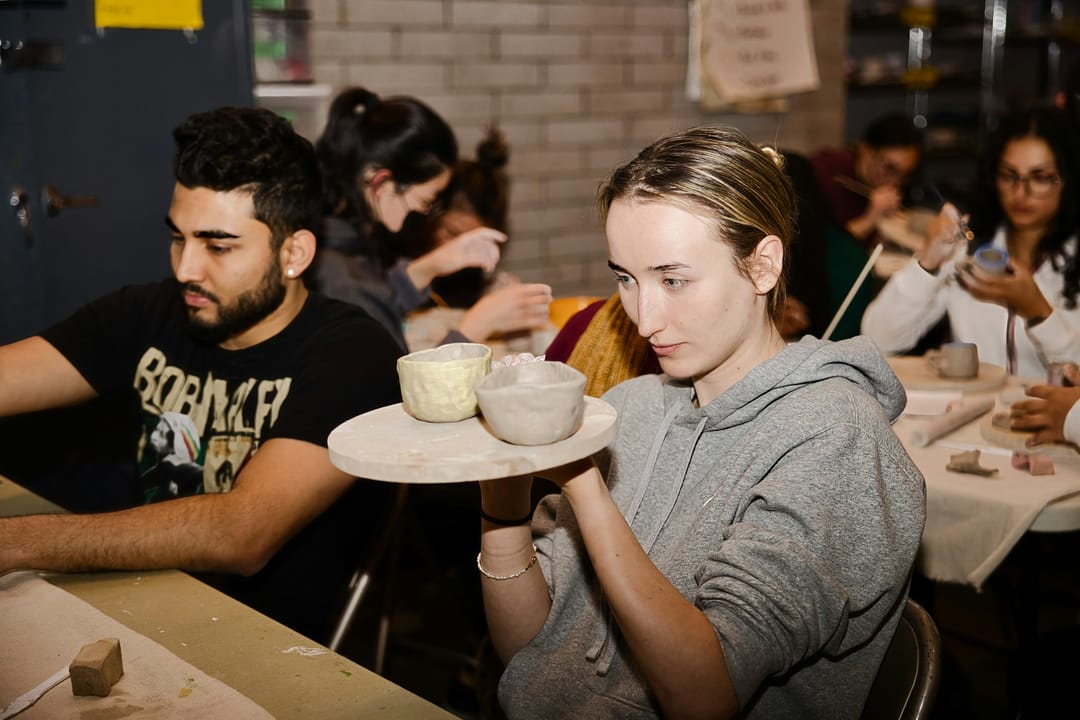
Structured options are easy wins. At a Silent Book Club you bring your own book, and there's usually about an hour of quiet reading before anyone talks; stay for the chat after, or don't. A pottery class works the same way, since your hands have a job.
Bring two questions that go past the weather (here's how to start a conversation with someone new). In a study of Chicago commuters, people expected talking to a stranger to be worse than sitting alone, and the ones who talked had the better ride.
Human beings are deeply social and tend to reciprocate in conversation.
Nicholas Epley, University of Chicago

Then make one small plan, from these first hangout ideas for new friends. It all works, but it means walking into rooms of strangers and speaking first. If you'd rather begin with one person who already shares your interests and your pace, there's a gentler way in.
The easiest way to make friends as an introvert
Alyke is built to help you find intentional friends, one person at a time. Most friend apps hand you generic recommendations. Alyke starts your feed with the people who share your vibe the most, based on your interests and personality instead of your looks. For an introvert, that's the easiest start: no room to work and no opener to invent, since your first message is about something you both love.
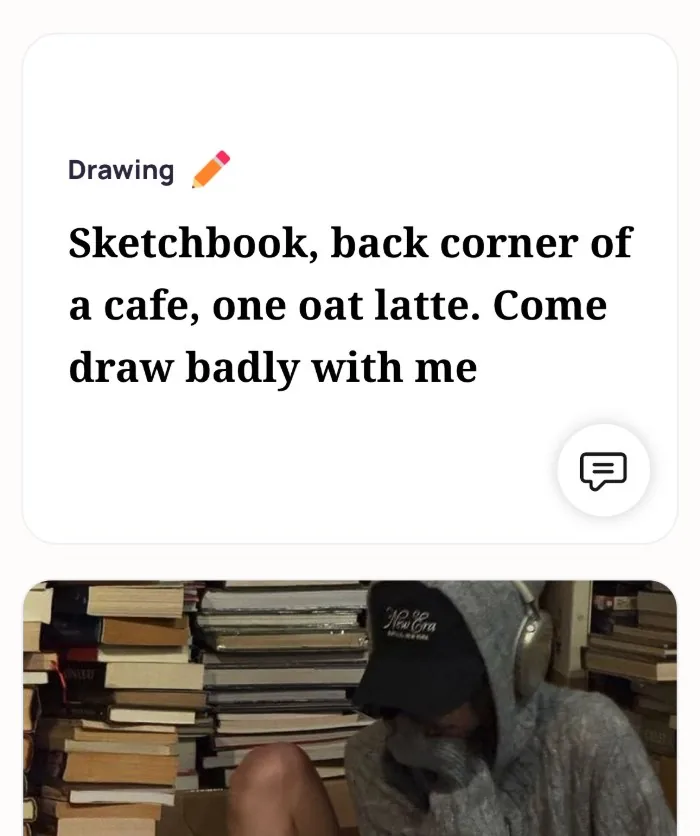
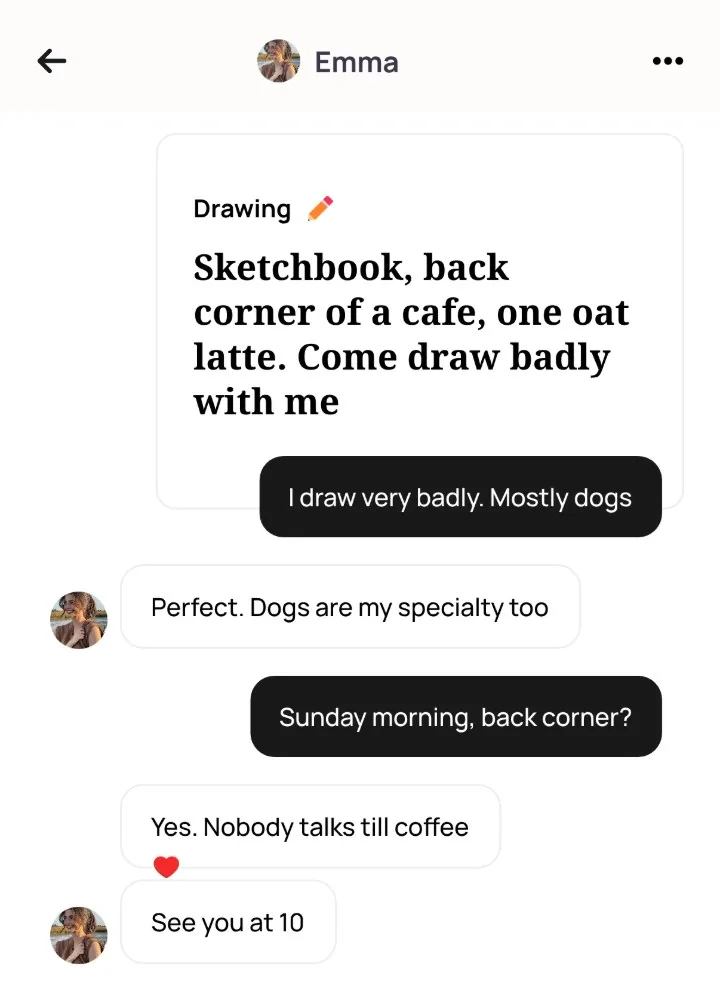
You answer three this-or-that personality pairs, including Introverted or Extroverted and Chill Hangouts or Energetic Spaces, and they show on your profile. Each interest you choose gets a line in your words. To add someone, comment on a line of theirs. When they like your vibe back, you're friends, and your comment opens the conversation.
Questions people ask
What do introverts say to someone new?
One honest question about something they care about is enough, followed by a real answer when they ask you something back. You don't need small talk or a clever opener. On Alyke, you start in writing, which gives you time to think: you comment on something in another person's profile, like an interest or a prompt answer, and that comment becomes the start of your chat.
Is one-on-one better than groups for introverts?
For many introverts, yes. One conversation is easier to follow than five, and it's where people really get to know each other. Alyke is made for one-on-one friendship. Your profile shows three personality picks, including Introverted or Extroverted, so if you choose Introverted, the people you meet know a calm coffee suits you better than a loud night out.
What should an introvert put on a friend app profile?
Specific things that give people an easy way to start talking to you, like a niche interest or a strong opinion. On Alyke, you can answer prompts, which are short questions on your profile, such as "My niche obsession nobody asked about:". A good answer gives people something easy to comment on, so they're more likely to reach out to you first.
Is there a friendship app for introverts?
Yes, Alyke is a friendship app for iPhone built for meeting people one-on-one, which suits many introverts. You start in writing by commenting on something in someone's profile, like an interest or a prompt answer, so there's no small talk and no crowd. Your profile shows three personality picks, including Introverted or Extroverted. Choose Introverted and Chill Hangouts, so people know a quiet coffee is your idea of a good first plan.
How can introverts make friends without big social events?
Alyke lets introverts make friends one person at a time, with no parties or networking events involved. Its feed starts with people who share your interests and have a personality like yours, and you add a friend by commenting on something in their profile. When they like your vibe, your chat opens with that comment, and you can take your time replying. Answering the prompt "I will talk your ear off about..." gives people an easy way in.
Does Alyke work for introverts?
Alyke works well for introverts because every friendship starts with one person and one written comment, at your own pace. Profiles show interests, personality picks and prompt answers, so you know what you have in common before you say hello. Every member verifies their phone number and photos. For a first meeting, pick a plan with an activity built in, like browsing a bookstore, so the conversation has something to lean on.
Sources
- Association for Psychological Science. Couples, friends show similarity in personality traits after all, 11 Feb 2017, on Wu, Kosinski, Schwartz and Stillwell, Psychological Science.
- YouGov. Americans say extroverts have more advantages than introverts in many social scenarios and jobs, 8 Apr 2023.
- American Psychological Association. Getting beyond small talk, 30 Sept 2021, on Kardas, Kumar and Epley, Journal of Personality and Social Psychology.
- Yale News. At first meeting, people like you more than you think, 4 Sept 2018, on Boothby, Cooney, Sandstrom and Clark, Psychological Science.
- Silent Book Club. About.
- Axios San Diego. Silent book clubs are the new happy hour for introverts, 20 Jan 2026.
- Chicago Booth. Mom was wrong: you should talk to strangers, 17 July 2014, on Epley and Schroeder, Journal of Experimental Psychology: General.